
Midlife Cravings: How to Listen Without Fear - and Finally Feel Free
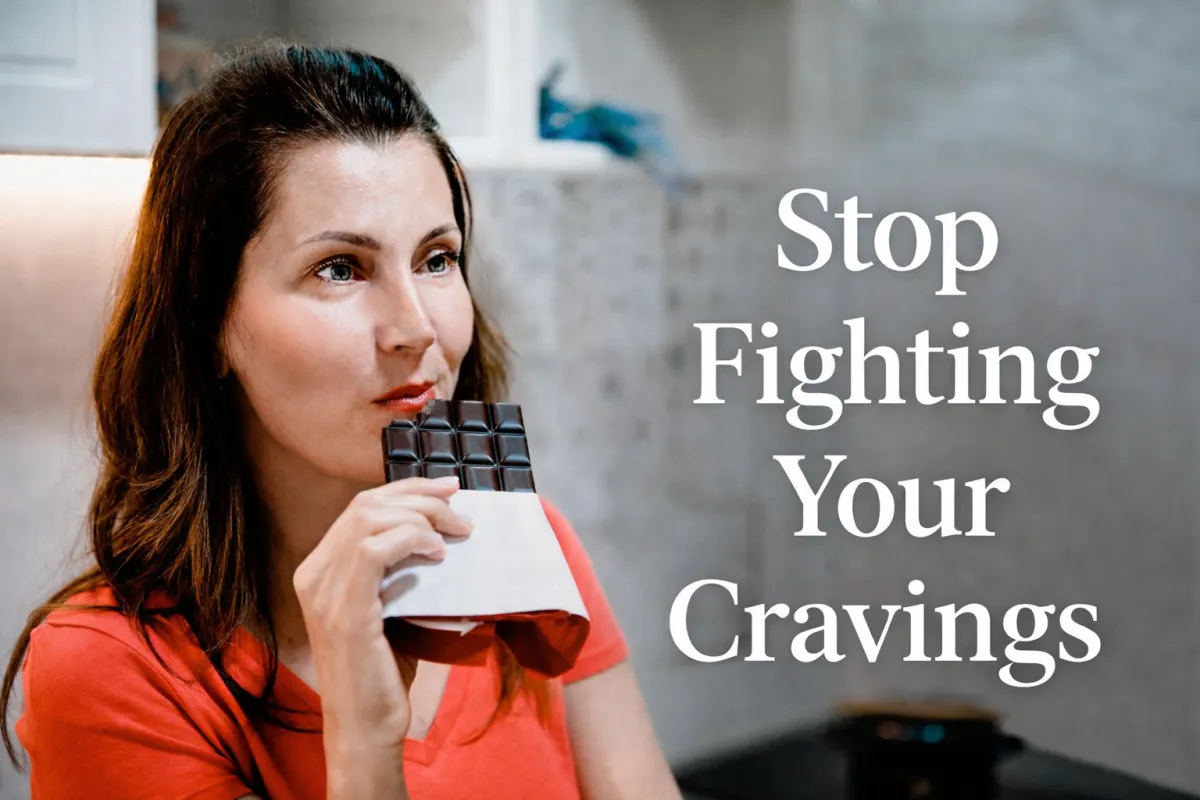
Cheese and chocolate.
Those have always been my downfall.
For years, I tried to resist them - ignoring the cravings, pushing past the hunger, telling myself, "No, you shouldn't want that."
But every time I denied those cravings... they only got louder.
Until one night, I'd find myself standing in front of the fridge, raiding it for anything I could grab - feeling like I'd ruined all the progress I'd made with my health.
Sound familiar?
Here's what I wish someone had told me back then:
Those cravings? They're not the enemy.
They're signals.
And once I learned how to listen to what my body was really asking for... everything changed.
I could finally enjoy the cheese. Enjoy the chocolate.
Without guilt and feeling like I had to start over every Monday.
And maybe... you're ready for that too.
Today, I want to invite you into a different conversation - one where food isn't a fight, but an invitation.
An invitation to rebuild trust with your body and listen again.

Why We Stopped Trusting Ourselves
Have you ever wondered why it's so hard to "just listen" to your body?
Why hunger feels confusing... cravings feel dangerous... and fullness feels like failure?
It didn't start with you.
We were all born knowing how to eat.
Babies cry when they're hungry.
Babies stop eating when they're full.
But somewhere along the way, we were taught to stop listening.
We learned rules like:
"Don't eat after 7 pm."
"You're not really hungry - drink water instead"
"Clean your plate, don't waste food"
"You can't trust your cravings - they'll make you gain weight"
At first, they sounded like wisdom.
But really?
Those rules taught us to second-guess ourselves at every turn.
We stopped trusting hunger.
We stopped trusting fullness.
We believed cravings were dangerous.
And deep down... many of those rules weren't rooted in love.
They were rooted in fear.
Fear of gaining weight, being judged and losing control.
And fear? It disconnects us from the very signals our body was designed to give.
So if you've ever felt confused by your cravings - if you've ever felt like you couldn't trust yourself - it's not your fault.
You were taught to stop listening.
But here's the good news:
You can relearn to listen and rebuild trust.
And it starts with curiosity... not control.
Cravings Aren't the Enemy: Learning to Listen Again
For so many of us, cravings have felt like the enemy.
Like a battle we're destined to lose.
But what if they're not trying to sabotage you?
What if cravings are actually clues - signals from your body, heart, and soul that something needs attention?
Once I stopped fighting my cravings and started listening, I realized something powerful:
Not every craving is about food.
Sometimes the chocolate wasn't about hunger.
Sometimes the cheese wasn't about a snack.
Sometimes... they were standing in for something deeper.
That's when I learned about the 5 Hungers - and they changed the way I saw cravings forever.
Each hunger speaks a different language.
And the more we learn to listen, the more we understand what we're really longing for.

Let me walk you through them:
Stomach Hunger
This is the physical hunger most of us think of - belly growls, low energy, feeling shaky of tired. It's your body's simple way of saying: "I need fuel."
If we ignore stomach hunger long enough, it doesn't disappear - it comes back louder, more urgent, more overwhelming.
That's why sometimes we feel "out of control" around food.
Paying attention early matters.
Heart Hunger
This is the hunger for love, comfort, warmth, connection.
Ever find yourself wanting a snack late at night, not because you're physically hungry - but because you're lonely?
That's heart hunger.
It's simply your body saying: "I need to feel cared for."
Mind Hunger
This one's sneaky.
It's the voice in your head saying:
"You shouldn't eat that."
"You've already had enough."
"You deserve a treat - you were so good today."
Mind hunger is shaped by diet culture, social media, family rules.
It's a hunger for control, for doing things "right".
Noticing when choices are coming from "should" instead of "want" or "need" is powerful.
Sensory Hunger
This is the craving for flavor, texture, smell, the beauty of food.
It's why sometimes you want something crunchy... or creamy... or warm.
It's the desire to experience food - not just fuel.
And honestly?
Pleasure isn't the enemy.
Pleasure is part of the nourishment.
Soul Hunger
This one runs deep.
It's the hunger for meaning, joy, beauty, adventure, purpose.
It's the ache inside when life feels too small, too routine, too disconnected.
Sometimes... we try to fill our soul hunger with food.
But what we're really longing for is fulfillment. Belonging. Creativity. Aliveness.
Next time a craving shows up, instead of judging it, I want you to pause and ask:
"Which hunger is this really?"
Because sometimes?
A cookie is exactly what you need.
But sometimes... what you're really craving can't be found in the pantry.
So... What Was My Body Really Saying?
Earlier, I told you that cheese and chocolate have always been my downfall.
But now?
I see them differently.
When I paused and listened, I realized something:
My cheese cravings?
They weren't about "being bad" or "losing control."
They were my body's way of asking for more protein and healthy fats - nutrients that support my hormones, my muscle health, even my bone density as I move through midlife.
And the chocolate?
I realized it wasn't just about sugar.
It was my body - and maybe even my heart - asking for a little comfort at the end of the a long day.
For a moment of pleasure, of slowing down, of ease.
And yes - chocolate also has magnesium, a mineral that many of us are low in, especially when we're stressed or always hustling.
The beautiful thing?
Once I understood what those cravings were really asking for... I didn't need to fight them anymore.
I could honor them and meet the real need.
Now, one small square of dark chocolate is plenty.
Especially the one I found that doesn't spike my blood sugar - thanks to wearing a continuous glucose monitor for a month and learning what worked best for my body.
And I want that freedom for you too.
Because the moment we stop fighting our cravings - and start listening with curiosity instead of control?
That's the moment we begin rebuilding trust.
Missed the first two parts of this series?
We've been building up to this moment - start from the beginning here:
Let's Keep Walking This Road Together
Friend, you've made it through so much. You've questioned old rules. You've started listening again. You've opened your heart to something new.
And that's not small. That's huge.
But you don't have to do this alone.
If you want to keep practicing these steps, I've created a free worksheet that pairs beautifully with everything we've talked about in this series. You'll find it waiting for you inside our private Facebook group - along with the full archive of past livestreams, reflections, and conversations with other women walking this same journey.
Come join us!
And if you've missed any part of this series, now's the perfect time to catch up.
Need support? I offer one-on-one coaching for midlife women who are ready to ditch the dieting cycle for good. Email me at [email protected] and let's talk.
Keep listening. Keep honoring what you're truly hungry for.
Because you?
You're worth every bite, every breath, every beautiful step forward.
Much love,

Want to Join Us Live?
You're invited to hang out with us every Wednesday for our weekly livestream!
Just join the Facebook group to watch live, grab the free workbook that goes with each session, and be part of a community of women making life beautiful again—together.
Missed it live?
You can always catch the video replay on YouTube or listen in on your favorite podcast platform (just click below).
Frequently Asked Questions:
What causes cravings in midlife women?
Cravings in midlife are often influenced by a mix of physical, emotional, and hormonal changes. As our bodies shift, we may need more nutrients like protein, healthy fats, or minerals such as magnesium.
But cravings aren’t just physical—they can also reflect emotional needs like comfort, rest, or connection. Instead of seeing cravings as a problem, it can be helpful to view them as signals worth paying attention to.
How do I stop feeling out of control around food?
Feeling out of control around food often comes from restricting or ignoring your body’s needs for too long.
When we override hunger or deny cravings, they tend to come back stronger—leading to that cycle of “being good” and then feeling like we’ve gone off track.
Rebuilding trust starts with small steps:
Eating regularly
Noticing hunger before it becomes extreme
Approaching cravings with curiosity instead of guilt
Over time, this helps your body feel safe again—and that “out of control” feeling begins to fade.
Is it okay to give in to cravings?
Yes—but with a shift in perspective.
Instead of “giving in,” think of it as responding intentionally.
Sometimes your body truly needs the food you’re craving. Other times, the craving may be pointing to something deeper—like rest, stress relief, or connection.
The goal isn’t to control cravings or follow them blindly—it’s to understand what they’re really asking for.
Why can’t I trust my hunger and fullness cues anymore?
If you’ve spent years dieting or following food rules, it makes sense that those cues feel confusing.
Things like skipping meals, eating on a schedule instead of hunger, or labeling foods as “good” or “bad” can disconnect you from your body’s natural signals.
The good news?
Your body hasn’t forgotten how to communicate.
With patience and practice, you can relearn how to recognize hunger and fullness in a way that feels calm and trustworthy again.
What are the different types of hunger?
Not all hunger is physical.
Many women experience different types of hunger, including:
Physical hunger (your body needing fuel)
Emotional hunger (comfort, connection, care)
Mental hunger (food rules and “shoulds”)
Sensory hunger (taste, texture, enjoyment)
Deeper life hunger (purpose, joy, fulfillment)
Learning to recognize these can help you respond in a way that truly satisfies the need—not just temporarily quiets it.
How can I rebuild a healthy relationship with food after years of dieting?
Start by shifting from rules to awareness.
Instead of asking, “Is this allowed?”
Try asking, “What does my body need right now?”
Focus on:
Eating consistently
Letting go of perfection
Listening without judgment
Practicing curiosity over control
This isn’t about doing it perfectly—it’s about slowly rebuilding trust, one choice at a time.
Can I still improve my health without strict dieting?
Absolutely.
In fact, many women find that when they stop focusing on strict rules and start listening to their bodies, they make more sustainable and supportive choices.
Health isn’t built through punishment—it’s built through consistency, nourishment, and self-trust.
When you partner with your body instead of fighting it, you often care for your health in a deeper, more lasting way.