

Can Sun Exposure Help or Hurt Aging Skin?
You spent your younger years trying to get a tan. Now you are spending midlife trying to undo the dark spots, fine lines, and uneven skin tone it left behind.
Our generation baked in baby oil, competed over who could get the darkest, and visited tanning beds when summer ended. Then the warnings began, and many of us went from chasing the sun to becoming afraid of it.
That was certainly true for me.
I grew up near the beach, where tanning felt like part of the culture. My friends and I placed little star stickers on our skin so we could see how much color we gained in one afternoon. We covered ourselves in baby oil, stretched out beneath the sun for hours, and treated a golden tan like proof of a summer well spent.
Later, I added tanning beds to the routine because I wanted to keep that warmth and color through the winter.
I eventually experienced sun poisoning twice.
When information about skin cancer and premature aging became more widely discussed, my carefree relationship with the sun disappeared. Skin cancer runs in my family, so the warnings felt especially personal.
I remember going out on a friend’s sailboat and hiding beneath towels and blankets because I was terrified of the sun touching my skin.
I had swung from one extreme to the other.
And this is where many midlife women still find themselves.
We know repeated sun exposure can contribute to wrinkles, dark spots, collagen loss, and skin cancer. At the same time, we hear that sunlight supports vitamin D, mood, sleep, and overall health.
So which is it?
Is the sun helping your body or aging your skin?
The answer is more nuanced than “sunlight is good” or “sunlight is dangerous.” Your skin needs protection, but living in fear of the outdoors is not the answer either.
The goal is to understand how sunlight affects your skin, how to protect yourself without becoming obsessive, and what to do when years of sun exposure begin showing up on your face.
Let’s separate the benefits from the risks and find a healthier middle ground.
Is Sunlight Good or Bad for Your Skin?
Sunlight is not entirely good or entirely bad.
Your body uses sunlight to regulate your internal clock, support your mood, and produce vitamin D. Vitamin D plays an important role in bone health, muscle function, and immune support.
But UV radiation also damages skin cells.
Too much exposure can lead to:
Fine lines and deeper wrinkles
Dark spots and uneven pigmentation
Loss of firmness and elasticity
Rough, dry, or leathery texture
Precancerous skin changes
A greater risk of skin cancer
This is where we need to be careful with phrases like “healthy glow” or “healthy tan.”
A tan is a visible sign that your skin has responded to UV injury. It may look beautiful in the moment, but your skin is trying to protect itself from damage.
That does not mean you need to fear every ray of sunlight. It means intentional tanning and repeated burning should never be confused with healthy aging.
The goal is not to avoid the outdoors.
The goal is to stop treating sun damage like the price of enjoying your life.

Vitamin D May Be One of the Sun’s Most Important Anti-Aging Benefits
We talk so much about how the sun can age the skin that we often miss the other side of the story.
Your skin does more than sit beneath the sun. It actually helps your body make vitamin D.
And vitamin D is not only important for bones and immunity. Your skin has vitamin D receptors, and research suggests that healthy vitamin D activity plays a role in how the skin functions, repairs itself, manages inflammation, and responds to oxidative stress.
That matters in midlife.
Vitamin D supports several processes connected to healthier aging skin, including:
Normal skin-cell growth and renewal
Skin-barrier function
Immune activity within the skin
Protection against oxidative stress
Regulation of inflammation
The skin’s response to DNA damage
Healthy aging at the cellular level
Recent reviews describe vitamin D as having protective effects against oxidative stress, inflammation, cellular aging, and some of the damage associated with both chronological aging and photoaging. Researchers are still studying exactly how these mechanisms work in people, so I would not call sunlight a wrinkle treatment. But it is fair to say that vitamin D is part of the skin’s own protective and healthy-aging system.
This is the part of the sun conversation that often gets left out.
UV exposure can create oxidative stress and break down collagen when you get too much. At the same time, UVB light triggers vitamin D production in the skin, and the vitamin D system may help the skin respond to inflammation, oxidative stress, and UV-related damage.
That does not mean more sun always equals more anti-aging benefit.
It means the relationship is not as simple as “sun equals aging.”
Too much UV exposure can absolutely accelerate visible aging. But too little vitamin D may also work against healthy skin function.
The goal is enough support for healthy vitamin D levels without repeatedly burning or overwhelming your skin.
Midlife Skin May Produce Less Vitamin D
This conversation becomes even more important as we age.
Our skin’s ability to produce vitamin D declines over time. Research has found that the amount of the vitamin D precursor in the skin decreases significantly with age, which means a woman in midlife or later may not produce vitamin D as efficiently as she did in her twenties.
That does not mean you should stay outside until your skin turns pink.
It means women in midlife need to stop assuming that avoiding nearly all sunlight automatically supports healthy aging.
Your vitamin D status can be influenced by:
Age
Skin tone
Season
Latitude
Time spent outdoors
Clothing
Sunscreen use
Diet
Supplementation
Digestive and metabolic health
This is why I prefer balance over fear.
Enjoy sensible sunlight. Protect yourself before you burn. Use physical barriers and non-toxic sun-care options according to the strength and length of exposure. Then test your vitamin D level if you are concerned instead of guessing from either extreme.
Sunlight can damage the skin when exposure becomes excessive.
Vitamin D can also support the skin’s ability to function and age well.
Both statements can be true.
What About Vitamin D?
This is where the conversation becomes more complicated.
Your skin produces vitamin D when it is exposed to UVB rays. But the amount your body makes depends on several factors, including:
Your age
Your skin tone
Where you live
The season
The time of day
How much skin is exposed
Cloud cover
Your clothing
Certain medications and health conditions
That is why advice such as “just spend 15 minutes in the sun” is too simplistic.
Fifteen minutes may be very different for a fair-skinned woman in Florida than it is for a darker-skinned woman living in Michigan during winter.
You also do not need to tan or burn in order to support healthy vitamin D levels.
The American Academy of Dermatology recommends getting vitamin D through food and supplementation rather than intentionally exposing unprotected skin to UV radiation.
Researchers continue to study how sunlight affects overall health, so you will hear different opinions about how much exposure is beneficial.
The safest answer is to stop guessing.
Ask your healthcare provider to test your vitamin D level if deficiency is a concern. A simple blood test gives you more useful information than trying to calculate how many minutes you should stand in the sun.
Does Sunscreen Completely Block Vitamin D?
Your skin needs UVB light to produce vitamin D.
Sunscreen is designed to reduce the amount of UVB reaching your skin. When it is applied thoroughly, at the recommended amount, and reapplied according to the directions, it can significantly reduce the UVB available for vitamin D production.
That is part of how sunscreen prevents burning.
It is also why women who cover nearly every exposed area, apply high-SPF sunscreen consistently, and spend very little time outdoors may need to pay closer attention to their vitamin D levels.
A 2025 randomized trial found that routine use of high-SPF sunscreen resulted in lower vitamin D levels than discretionary sunscreen use. The researchers concluded that regular sunscreen users may need vitamin D supplementation.
Before you panic and throw every bottle away, there is another part of the story.
Most people do not use sunscreen according to the testing directions.
They apply a thin layer, miss areas, forget to reapply, sweat, swim, wipe their face, or put sunscreen only on the places most likely to burn. Because real-life application is imperfect, research has not consistently found that ordinary sunscreen use completely prevents vitamin D production.
So yes, sunscreen can interfere with the process your skin uses to make vitamin D, especially when it is applied carefully and consistently.
Your skin tone, age, location, diet, health, season, clothing, and time spent outdoors all affect your vitamin D level too.
This is why I would rather have my vitamin D tested than assume I am getting enough.
Knowing your number allows you to make an informed decision about food, supplementation, sun exposure, and how much protection makes sense for your body.
Finding a Balanced Approach to Sun Protection
I do not believe the answer is to coat yourself in ingredients you are uncomfortable using every time you step outside.
I also do not believe repeated burning is harmless.
There is room for a thoughtful middle ground.
You can protect your skin while still caring about the ingredients going onto your body. You can enjoy sunlight without spending hours intentionally baking in it. You can also choose physical protection when you would rather skip topical products altogether.
That is the approach I prefer.
Start with timing and common sense
Your risk of burning changes throughout the day, throughout the year, and according to where you live.
A short walk in gentle morning light is different from sitting beside a pool for four hours in the middle of the afternoon.
Pay attention to:
The UV index
The time of day
How long you will be outside
Your skin tone and burn history
Your location and altitude
Medications or skincare ingredients that increase sun sensitivity
Whether shade will be available
You do not need to treat every outdoor moment the same.
Longer exposure, stronger midday sun, high altitude, reflective water, snow, and pale sand require more protection than a few minutes outside in softer light.
Use physical protection when you prefer no product
I understand the desire to put nothing on your skin because I often feel the same way about toxins and blocking my body from sweating properly.
Protective clothing allows you to reduce UV exposure without applying sunscreen over your entire body.
Your options include:
A wide-brimmed hat
UPF-rated shirts, wraps, and swimwear
Lightweight long sleeves
Tightly woven clothing
UV-protective sunglasses
A beach umbrella or canopy
Shade during the strongest part of the day
This is one of the easiest ways to find balance.
You can cover the areas receiving the most direct exposure and use a cleaner topical product only where clothing is impractical.
A hat, long sleeves, and shade can dramatically reduce the amount of sunscreen you need to put on your skin.
What Kind of Sunscreen Do I Prefer?
When I need topical sun protection, I prefer a non-toxic mineral sunscreen over a conventional chemical formula.
It is because I prefer to limit unnecessary exposure to ingredients with unresolved safety questions when effective mineral options are available.
The FDA has identified zinc oxide and titanium dioxide as the two conventional sunscreen ingredients with sufficient evidence supporting their general safety and effectiveness. For several other commonly used sunscreen filters, the FDA has requested more safety data before making the same determination.
That distinction matters to me.
I look for a mineral sunscreen with:
Non-nano zinc oxide when available
No synthetic fragrance
No oxybenzone
No octinoxate
A short, transparent ingredient list
The Environmental Working Group also maintains a searchable sunscreen guide that evaluates ingredient concerns and protection claims. It can be a useful tool when comparing cleaner options.
Mineral sunscreen is still sunscreen.
It is designed to reduce UV exposure, so it can also reduce the amount of UVB available for vitamin D production when applied thoroughly.
Choosing mineral sunscreen does not mean I believe my body needs to be covered in it from sunrise to sunset.
It means that when I decide sunscreen is necessary, I choose a formula that better fits my ingredient standards.
What About Earthley Sun Shield?
One product I enjoy using is Earthley Sun Shield.
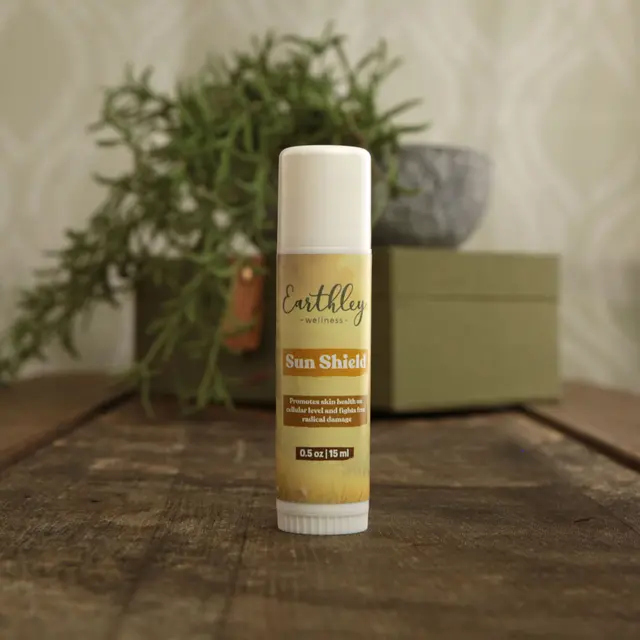
Sun Shield is made with oils and herbs chosen to nourish and support the skin during outdoor exposure. I appreciate the simple ingredient philosophy, especially when I want something lighter and more natural on my skin.
Earthley clearly states that Sun Shield is not an SPF-tested sunscreen.
That means I cannot tell you that it will prevent a burn or provide a specific level of UV protection.
I use it as supportive sun care, not as a guarantee that my skin cannot burn.
How I use it depends on the situation.
For shorter or gentler outdoor exposure, I may choose Sun Shield along with sensible timing and paying attention to my skin.
[Click Here to Try It and Use code: michellerose]
For stronger sun or a longer outdoor day, I add layers of protection such as:
A wide-brimmed hat
UPF clothing
Shade
Sunglasses
A tested non-toxic mineral sunscreen on exposed areas
That is what balance looks like for me.
I do not have to choose between blindly trusting every conventional sunscreen ingredient and going into intense sunlight completely unprotected.
I can choose the cleanest option appropriate for the amount of exposure I am getting.
Clean Ingredients Still Require Honest Expectations
“Natural” does not automatically mean a product can prevent sunburn.
Botanical oils, herbs, butters, and antioxidants may nourish the skin and help support its natural defenses. They can be valuable parts of a clean sun-care routine.
They do not come with a reliable SPF unless the finished product has been properly tested and labeled.
That does not make natural sun-support products worthless.
It means we need to be honest about what they are designed to do.
A nourishing herbal product can support your skin.
A hat can shade your face.
UPF clothing can reduce exposure.
A tested mineral sunscreen can provide measurable UV protection.
Each option has a different job.
You can combine them according to the strength of the sun, the amount of time you will be outside, your personal risk factors, and your comfort level with topical products.
Here is to knowing more about how our bodies and skin works,

Want Help Creating Your Own Balanced Sun-Care Plan?
I created a simple worksheet to help you think through your current sun habits, vitamin D concerns, preferred forms of protection, and what your skin may need before and after time outdoors.
Use it to identify where you may be getting too much exposure, where fear may be keeping you indoors, and which non-toxic or product-free sun-protection options fit your lifestyle.
You do not need to follow someone else’s all-or-nothing rules (including mine). The worksheet will help you create a thoughtful plan based on your skin, your health, and the way you actually spend time outside.
You can download it inside the Making Life Beautiful Again Facebook group.
Want to Join Us Live?
Every week inside the Making Life Beautiful Again Facebook group, I go live to break down these strategies with real-life examples, Q+A, and a downloadable worksheet to help you take action. You don't have to figure this out on your own.
Join us Wednesdays at 1:30pm CST for our weekly livestream!
Missed it live?
You can always catch the video replay on YouTube or listen in on your favorite podcast platform (just click below).
FAQ
Does sunscreen completely block vitamin D production?
When sunscreen is applied at the full recommended amount and reapplied correctly, it can significantly reduce the UVB radiation your skin uses to produce vitamin D.
Most people do not apply sunscreen perfectly in everyday life. They use too little, miss areas, sweat, swim, wipe it away, or forget to reapply. This helps explain why ordinary sunscreen use does not always eliminate vitamin D production or automatically cause a deficiency.
Your vitamin D level is also influenced by your age, skin tone, diet, location, season, health, and time spent outdoors. A blood test gives you more reliable information than guessing.
Do I need to wear sunscreen every time I step outside?
Every outdoor situation does not carry the same level of exposure.
A few minutes in gentle morning sunlight is different from spending several hours outside in strong midday sun. Consider the UV index, time of day, altitude, length of exposure, your burn history, and whether you use medications or skincare products that increase sun sensitivity.
When stronger protection is needed, sunscreen is only one option. Hats, shade, sunglasses, tightly woven clothing, and UPF garments can reduce exposure without covering your entire body in a topical product.
What is the difference between mineral and conventional chemical sunscreen?
Mineral sunscreens use zinc oxide, titanium dioxide, or both as active ingredients. These are the sunscreen ingredients I prefer when I need tested topical protection.
Conventional formulas may use filters such as oxybenzone, octinoxate, avobenzone, octisalate, homosalate, or octocrylene. Safety profiles and regulatory decisions vary by ingredient and country.
My preference is to choose a transparent, non-toxic mineral formula without synthetic fragrance, aerosol propellants, or unnecessary fillers.
Can Earthley Sun Shield replace sunscreen?
Earthley Sun Shield is not an SPF-tested sunscreen, and the company does not claim a specific level of UV protection.
I use it as supportive outdoor skincare, especially during shorter or gentler exposure. For long periods in strong sun, I combine it with physical protection or use a tested mineral sunscreen on the areas that remain exposed.
Can I protect my skin without putting on sunscreen?
Yes. Physical protection can carry much of the load.
Use a wide-brimmed hat, UPF clothing, lightweight long sleeves, sunglasses, shade, umbrellas, and thoughtful timing. These options are especially helpful when you prefer not to cover your skin in a topical product.
The amount of protection needed depends on the intensity and duration of the exposure.
Is a tan a sign of healthy skin?
A tan is your skin’s response to UV exposure and cellular injury.
You do not need to panic over every change in color, but intentionally tanning should not be considered a health or anti-aging practice. Repeated tanning contributes to accumulated skin damage, pigmentation changes, collagen breakdown, and increased skin cancer risk.
What should I put on sunburned skin?
Begin with cool water or a cool compress. Apply a simple moisturizer containing ingredients such as pure aloe vera, and drink additional water.
Avoid fragrance, drying alcohols, exfoliating acids, scrubs, retinoids, strong vitamin C products, heat, and aggressive facial tools until the skin has calmed.
Seek medical help for severe blistering, intense pain, fever, confusion, vomiting, dehydration, or a burn covering a large portion of the body.
Can vitamin C remove dark spots caused by the sun?
Vitamin C may gradually brighten the appearance of uneven pigmentation and support a more even skin tone. It also provides antioxidant support and plays a role in collagen production.
Results require consistent use, and vitamin C cannot erase every form of sun damage. New, changing, bleeding, rough, or non-healing spots should be examined by a qualified professional before being treated as ordinary pigmentation.
How can I tell whether a spot is sun damage or skin cancer?
You cannot always tell by looking at it yourself.
Have a spot examined when it is new, changing, bleeding, growing, rough, repeatedly crusting, noticeably different from your other spots, or refusing to heal.
When in doubt, make the appointment. Early evaluation is far better than spending months hoping a suspicious area will disappear.
This article is for educational purposes and is not a substitute for individualized medical advice. Women with a history of skin cancer, unusual or changing skin spots, photosensitive conditions, or medications that increase sun sensitivity should discuss sun protection with a qualified healthcare professional.