

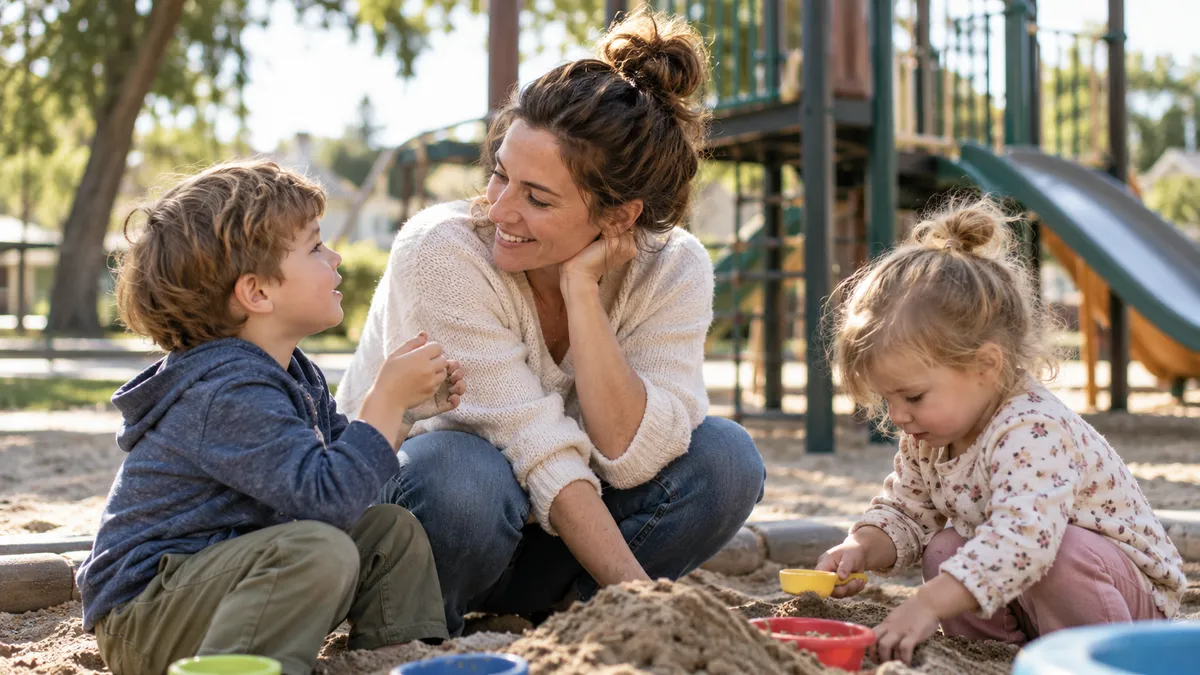
What Your Children Learn When You Become the Woman God Created You To Be
I’ve noticed something about women, especially as we get older.
We can be incredibly good at seeing potential in everyone except ourselves.
We’ll tell our daughter to apply for the job because she is more qualified than she realizes. We’ll tell our son not to give up after one disappointment. We’ll look at a granddaughter in a dress she isn’t sure about and say, “Oh honey, you look beautiful,” before she has a chance to pick herself apart.
We are so quick to remind the people we love who they are.
And then we walk past our own reflection and think, Well... things sure aren’t where they used to be.
We get invited to do something and immediately start listing all the reasons someone else would be better.
We have an idea we would love to pursue, but life is busy and the kids still need us, even if those “kids” are 32 and calling because they need advice about a mortgage.
Then the grandkids arrive and we become the emergency babysitter, snack carrier, keeper of extra Band-Aids and the person everybody calls because Mimi will know what to do.
I say that with a smile because I love being Mimi.
But I also know how easy it is for women to spend so many years helping everybody else become who they are supposed to be that we forget God is still doing something in us too.
I remember becoming a grandmother at 45 and realizing I had entered a whole new chapter of life much earlier than I expected. I loved the new role. But it also made me think about aging, legacy and the kind of woman I wanted my grandchildren to know.
Would they know me only as Mimi?
Or would they get to know the woman God created me to be too?
The woman with ideas and dreams.
The woman willing to try something new.
The woman who still wanted to grow, learn, create, take care of herself, laugh loudly, wear the lipstick and follow God wherever He decided to take her next.
That question has stayed with me.
Because whether your children are five, twenty-five or fifty-five, I don’t think we ever completely stop showing them what it looks like to be a woman.
They are watching how we talk about getting older.
They hear how we speak about our bodies.
They notice whether we keep using our gifts or quietly decide our turn has passed.
And maybe one of the most powerful things we can show them is this:
Becoming who God created you to be does not end when your children grow up.
We can get very comfortable being needed
For a lot of women, being needed becomes part of the rhythm of life.
Someone needs lunch packed, picked up, forgot something at school, needs advice, needs prayer, needs help moving, or needs you to watch the grandkids.
And for years, that can feel normal. Beautiful, even. There is something deeply meaningful about being the person your family can count on.
But there can also come a point when we know exactly who we are in relation to everyone else and feel a little fuzzy about who we are outside of those roles.
Wife. Mom. Grandma. Caregiver. Helper. The dependable one.
Those are all meaningful parts of a life. But they are not your whole identity.
Psalm 139 says God formed you intentionally. Ephesians 2:10 says you are His workmanship, created for good works He prepared in advance.
That means there was intention in you before anyone ever needed a ride to soccer practice. There are gifts in you that existed before motherhood. There are parts of you God may still be developing now.
And sometimes midlife is when we finally have enough quiet to hear that again.
The mirror can become a strange place in midlife
I talk with women about beauty for a living, so I hear the things we say when we think nobody is listening.
“I swear my neck looked different in the mirror this morning.”
“When did the skin on the back of my arms start moving like that?”
“I slept eight hours. Why do I still look so tired?”
“And why do I look fine in the bathroom mirror, but then someone takes a picture of me and I think, Wait… is that really what I look like now?”
Most of us can laugh about at least some of it. I certainly can. But there is usually something deeper underneath those comments.
Change can make us feel like we are losing pieces of ourselves. And once that starts happening on the outside, it can be easy to assume it is happening everywhere.
We start wondering if we somehow missed our window. If the years when we had more energy, fewer wrinkles around our eyes and a little more confidence were the years we were supposed to do something bold. We look at an idea we still care about and think, I should have done that ten years ago. Or we catch ourselves assuming the woman getting chosen, noticed or invited will be younger than us.
And little by little, we can start treating beauty, purpose and possibility like they belonged to an earlier version of our lives.
But I don’t believe God looks at a woman in midlife and thinks, Well, the best part is behind her now. I think we do that to ourselves. And the people around us hear it.
A daughter hears her mom call herself old every time she sees a picture she doesn’t like. A granddaughter hears a woman she adores complain about her stomach. A son watches his mother turn down an opportunity because she believes she is too old to start something new.
Those moments are small. But small things teach too.
I had to rethink what beauty meant
This is one of the reasons I wrote Crowned in Beauty.
For years I had been working in beauty and wellness. I kept meeting women who would almost apologize for wanting to look nice, as if caring about skincare, makeup or a beautiful outfit made them shallow or vain.
And I met women on the other end who had spent years inspecting every line, buying the next product, trying another plan and quietly hoping this would finally be the thing that made them feel good enough.
Neither way seemed to bring peace or freedom.
I had to start looking at beauty through a different lens.
What if beauty was never meant to be about proving our worth?
What if caring for ourselves could come from already knowing where our worth comes from?
That changes the conversation.
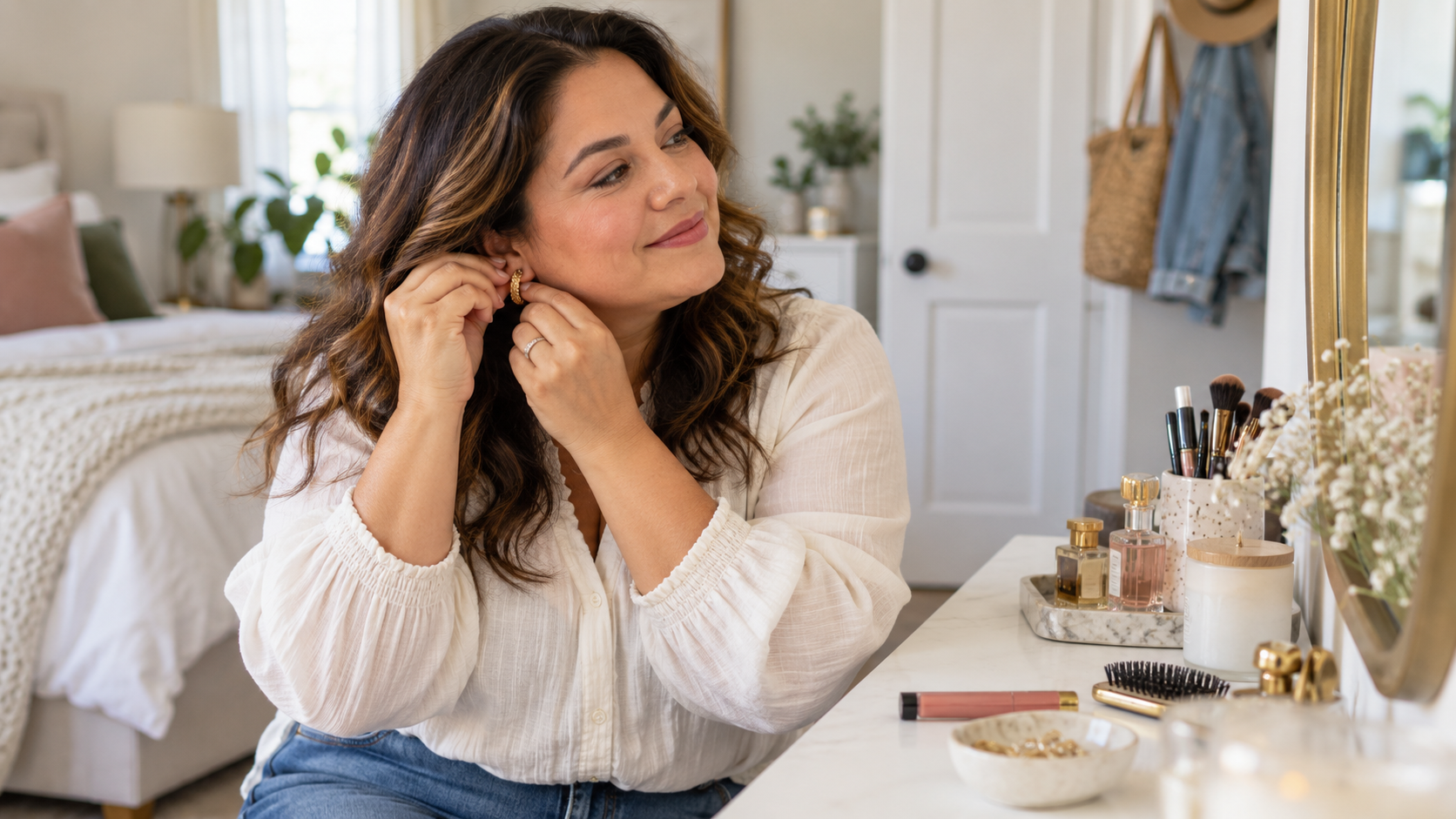
Skincare can look like washing your face at the end of a long day and taking an extra minute to massage in the moisturizer instead of treating yourself like one more chore to rush through.
Building strength can mean wanting to carry your own groceries, get up off the floor after playing with a grandbaby, or travel without wondering whether your body can keep up.
A dress you love can change the way you walk into a room. Lipstick can be the little thing you swipe on before meeting a friend for lunch because it makes you feel a bit more like yourself.
And rest can mean closing the laptop, leaving the dishes until morning and trusting that the world will keep turning while you sleep.
We do not have to turn every act of beauty into a spiritual crisis.
And we do not have to pretend appearance has no effect on how we feel either.
Sometimes you put on the earrings, stand a little taller and remember who you are.
I have watched that happen in women since I was a little girl.
One week she would come into church quietly, sit in her usual spot and barely say much beyond a polite hello.
Then another Sunday she would walk in with a fresh haircut, a brighter lipstick or an outfit that made her feel beautiful, and suddenly something about her changed.
She made eye contact. She lingered a little longer after the service. She joined the conversation instead of standing at the edge of it. Her laugh came easier and louder. You could almost see the real her.
The haircut had not created a new woman. It had simply given the woman who was already there permission to come forward for a while.
That image stayed with me because I saw how quickly she could disappear again once the newness wore off. And even as a little girl, I remember wondering why the woman I had glimpsed for those few weeks couldn’t stay.
Because I think many women spend years slowly moving behind the curtain.
And God keeps inviting us back out.
Esther’s story made me look at beauty and identity differently
When I began studying Esther more deeply, I became fascinated by the part of her story we often hurry past.
We love Esther 4. “For such a time as this.” That is the part we put on mugs and journals.
But before Esther 4 came Esther 2. There was preparation. There was a long stretch of time when Esther could not possibly have understood everything ahead of her.
I relate to that more as I get older.
There are seasons when you know something is changing, but you cannot quite see what the next thing is yet. Your children need you differently. Your body feels different. Your schedule changes. Work may look different than it did ten years ago. A dream you tucked away starts tapping you on the shoulder again.
And the first thought can be, At my age? Who would really listen?
That in-between place can feel uncomfortable because we like knowing what everything means.
But Esther’s story reminds me that preparation often makes sense later. God may be developing courage before you know where you will need it. He may be healing your identity before He gives you more visibility. He may be teaching you to care for yourself because the next chapter will require strength. And He may be asking you to stop hiding because someone else will need the version of you who finally learned how to show up.
Hiding can look surprisingly respectable
This is the tricky part.
We can tell ourselves we are being humble, practical or responsible.
And sometimes we are.
But there are other times when we know we are keeping something at arm’s length because we do not want to be disappointed.
We keep talking about the business idea but never take the first real step.
We say we want to write the book, then keep finding one more thing that needs to happen before we begin.
We feel God nudging us toward a new ministry, friendship or opportunity, but staying where we are feels safer than risking rejection, failure or finding out it does not work the way we hoped.
That kind of hiding can look very reasonable from the outside.
But inside, we know the difference between waiting on God and protecting ourselves from being hurt.
Jesus said we are the light of the world and then used the picture of a lamp being placed where it can actually give light.
That Scripture challenges me because light has to be visible to do what light does.
And for women who have spent years becoming experts at disappearing into everyone else’s needs, visibility can feel very vulnerable.
But there is a difference between making everything about yourself and allowing yourself to be seen.
Your family benefits from seeing a woman who is still willing to follow God.
Our children are learning how to age by watching us
This part matters to me more and more.
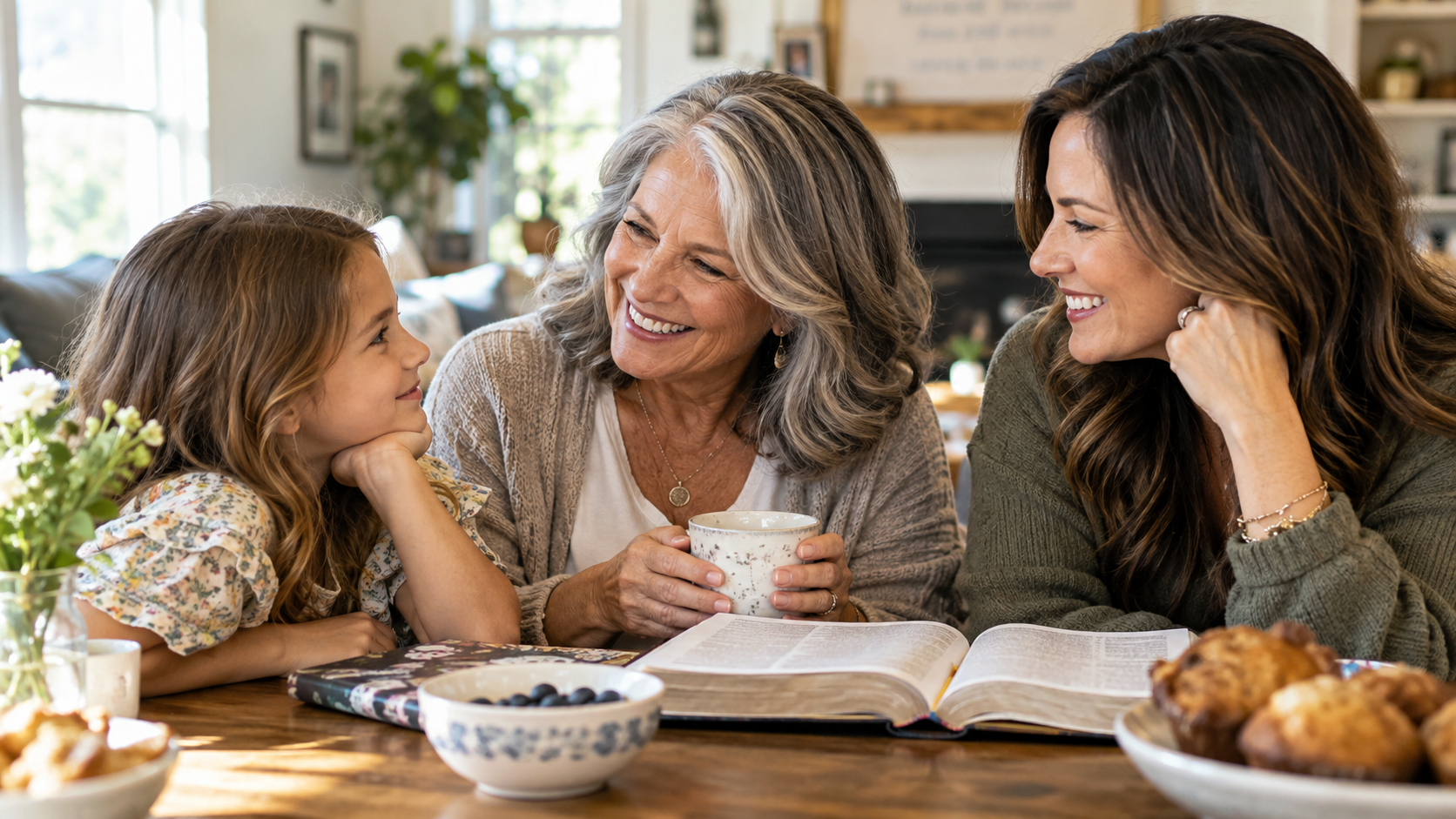
I want my children and grandchildren to see that getting older is not a slow surrender of everything that makes life interesting. I want them to see me still making plans, learning new things, going places, trying something I might fail at and caring enough about my life to keep growing in it.
I want them to know they can call me when life falls apart, yes. But I also want them to see me fully alive in my own life.
Because what happens if the women they love most spend the second half of life talking as though all the good parts are over? What does that teach a younger woman to expect from her own future?
I would rather show her something else. I would rather show her that a woman can become more fully herself with age. That wisdom and beauty can live in the same body. That confidence does not have to come from looking twenty-five. That God can still surprise you. That your usefulness does not expire because your kids no longer need you to sign permission slips.
You do not have to figure out your whole next season today
You may know something in you is waking up, but you are not sure what to do with it yet. You feel restless in a way you cannot quite explain. You want to take better care of yourself. You want to feel beautiful again. You keep thinking about the trip you have wanted to take, the class you keep looking up, the idea you have scribbled in three different notebooks, or the thing you used to love before life got so full. Or you simply want to feel like yourself again.
You do not have to turn that feeling into a five-year plan by Friday.
Start smaller. Ask God what He is showing you about the woman you are becoming. Pay attention to the things bringing you alive again. Notice what you keep circling back to. Give yourself permission to explore.
And when the old voice says, Who do you think you are?, remember that may actually be the right question. Who are you? Not only Mom. Not only Grandma. Not only the person everyone calls when they need something.
Who did God create you to be? And what might it look like to live like you believe Him?
Your family may need to see you become
One of the most powerful things a mother can model is that becoming who God created you to be does not end when your children grow up.
There is freedom in that. For you, of course. But also for them.
When your children see you keep growing, they learn that growth does not have an expiration date. When they watch you take care of your body, your mind and the gifts God gave you, they see that loving your family does not require disappearing from your own life. When they see you follow God into unfamiliar places, they get to see faith as something lived, not just talked about.
And when your grandchildren watch you light up talking about something you love, they get to know more than your role in their lives. They get to know you.
That may be part of legacy too. Not leaving behind the image of a woman who did everything perfectly. Leaving behind the memory of a woman who kept becoming. A woman who loved deeply, stayed curious, who cared for what God entrusted to her, who believed He could still use her. A woman who did not spend the second half of her life apologizing for taking up space.
So if you have been wondering whether there is still more for you, I hope you hear this clearly. God is not finished with you simply because one season changed.
Your children may be grown. Your face may look different. Your life may not resemble the one you pictured twenty years ago. But you are still here.
Still loved. Still being formed. Still carrying gifts. Still capable of beauty, courage, usefulness, joy and growth.
And somewhere nearby, someone you love may be learning what that looks like by watching you.
Much love,

P.S. If this conversation stirred something in you, grab my book Crowned in Beauty: Esther's Secret to Stewarding Your Beauty and Stepping Into Purpose
Want to Join Us Live?
Every Wednesday at 1:30pm CST, I go live inside the Making Life Beautiful Again Facebook group to talk through topics like this with real-life examples, Q+A and practical next steps.
If you like conversations about faith, beauty, confidence and becoming the woman God created you to be, come join us.
Missed it live?
You can always catch the replay on YouTube or listen on your favorite podcast platform.