
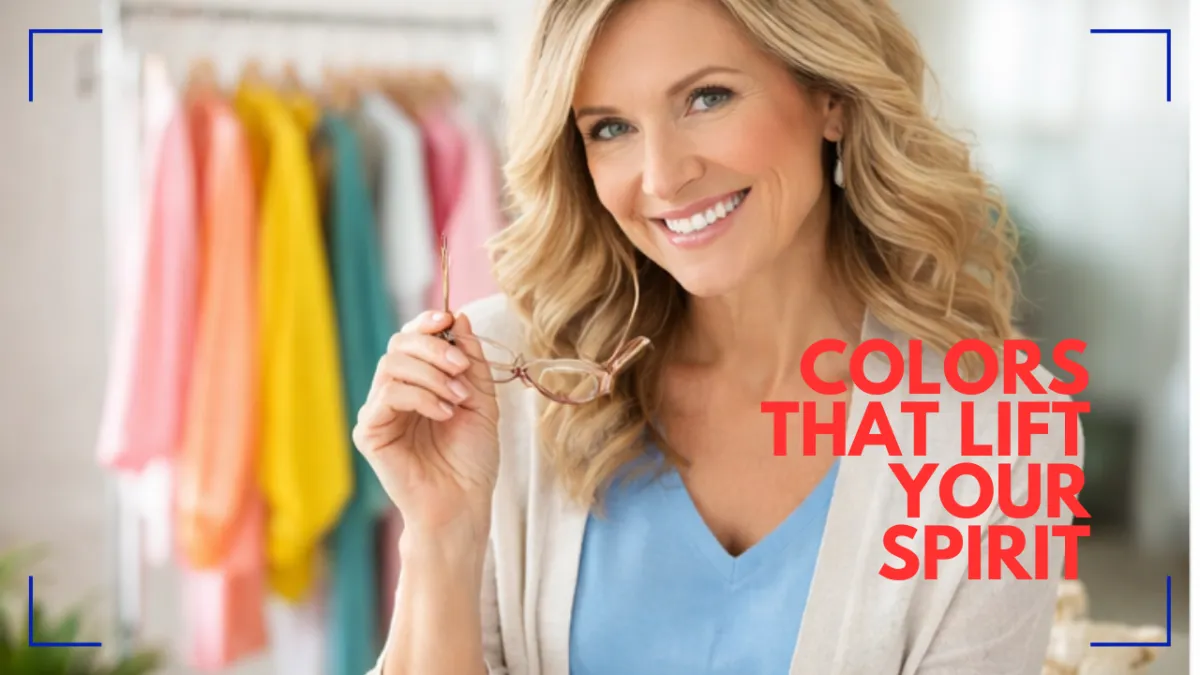
Dress Your Mood: Colors That Lift Your Spirit in Midlife
Have you ever put on a color and felt like you became… more you?
Not “more fashionable.” Not “more put-together.”
More alive. More steady. More confident. More able to face the day without that low-grade inner sigh.
That’s what we’re talking about today. Because in midlife, we’re not just getting dressed for a calendar invite. We’re getting dressed for a life season. And that season requires a different kind of support than our 20s and 30s did.
Seasonal analysis asks: “What colors look best on you?”
Today asks: “What colors help you feel like you again?”
And that’s a very different question.
In your 20s and 30s, clothing often plays the role of belonging. You’re building a life, proving yourself, juggling responsibilities, navigating body changes, figuring out how to be taken seriously, and trying to keep up with whatever the “cool kids” are doing.
Even if you never thought of yourself as someone who cared about trends, you still absorbed the pressure to look “right.”
Midlife does something beautiful, though.
You start getting clearer on who you are…and who you are not.
You don’t need permission to be yourself anymore. You don’t need the outfit to do all the social heavy lifting. And because of that, you can begin building something much better than a trend-based wardrobe:
A signature style.
And color is one of the most powerful tools you can use to build your wardrobe because color isn’t just visual. It’s sensory.
There’s a reason the idea of “dopamine dressing” has become popular—it’s built around the concept of choosing clothing (including color) with the intention of influencing your emotional state.
But let’s take that trendy phrase and make it midlife meaningful:
You’re not using color to impress anyone.
You’re using color to lift your spirit.
The Unexpected Truth: Clothes Can Change How You Think
Here’s one of those “wait…what?” details that backs up what so many women already know in their bones:
There’s a real psychological concept called enclothed cognition—the idea that what you wear can influence how you feel and how you perform, especially when the clothing carries meaning. In the original research, wearing a lab coat associated with a doctor increased attention performance compared to conditions where that meaning wasn’t present.
Now obviously, we’re not all walking around in lab coats trying to focus on emails.
But the takeaway is powerful: what you wear isn’t neutral.
It sends messages to your brain—about who you are, what you’re doing, and how you’re showing up.
And if clothing can do that, then color absolutely can.
The 4 Color Buckets That Help You Dress Your Mood
Instead of turning color into a rulebook, I like to teach this as four simple buckets.
You’re not picking a personality. You’re picking support.
You can have all four buckets in your closet. You’re just learning which one you need more of in this season of life—or even on a specific day.
Each bucket has a mood and a “base neutral” that makes it easy to build outfits without overthinking.
1) Lift and Light
Base neutral: White
This bucket feels like fresh air. Hope. Energy. A little joy coming back online.
These are the colors you reach for when you want to feel more awake, optimistic, and open. Think “morning light.” Think “new page.” Think “I can breathe again.”
If you’ve been feeling heavy, flat, or uninspired—this is often the bucket that gently pulls you back toward yourself.
2) Calm and Comfort
Base neutral: Grey
This bucket is steady. Peaceful. Grounded. Like exhale energy.
It’s for the days when you’re overstimulated, tender, or tired and you need softness—not sparkle. It’s quiet strength. It’s gentle confidence.
This isn’t “hiding.” This is soothing.
And if you’re thinking, “Yes, but is calm really a thing?”—research reviews on color and psychological functioning note that certain colors can influence alertness and attention, including findings related to blue light and subjective alertness.
Your body responds to sensory input. Color can be part of that input.
3) Dynamic and Rich
Base neutral: Brown
This bucket is depth. Warmth. Substance. It feels rooted and radiant at the same time.
It’s for when you want to feel more present, more dimensional, more “I have layers and I’m not apologizing for them.”
This is often a midlife favorite because it pairs beautifully with maturity and confidence. It doesn’t beg for attention, but it does have presence.
If Lift + Light feels like sunshine, Dynamic + Rich feels like candlelight.
4) Bold and Classic
Base neutral: Black
This bucket is strong, clear, confident, and timeless.
It’s what you reach for when you need to feel anchored and authoritative—like you’re walking into the room with clarity and boldness.
Not harsh. Not intimidating. Just steady power.
If you’re stepping into a leadership moment, setting boundaries, or simply trying to stop shrinking—this bucket tends to support you.
A Story That Proves Color Isn’t Neutral
I recently complimented an older man on the color green he was wearing—just a friendly comment. I expected him to smile and say thanks.
Instead he said, “Oh, I don’t do red.”
I laughed a little because… it’s a color. But I asked why.
He told me someone gave him red pajama pants for the holidays, and he decided to wear them to bed. That night he had intense dreams about war and fighting—dreams he’d never had before. He woke up and thought, “Nope. Red is not for me.” And he said he’d never wear it again.
Now, whether you explain that scientifically, spiritually, emotionally, or through personal association, the point is hard to ignore:
Some colors don’t just change how you look.
They change how you feel.
And that’s exactly why “Dress Your Mood” isn’t fluffy. It’s wisdom.
Even outside of clothing, research and education around color often notes that warm and cool colors can correspond with different physiological responses, and that personal association matters too.
How to Start Without Overhauling Your Closet
Here’s the most midlife-friendly part: you do not need a whole new wardrobe.
If you’re experimenting with color, the easiest place to start is near your face—because that’s where color has the biggest impact on how you look and how you feel.
Try one of these:
a top
a scarf
earrings
lipstick
glasses frames
even your nail color if you notice it all day
Then do a simple check-in:
Do I feel more alive or more invisible?
Do I feel more peaceful or more irritated?
Do I feel more confident or more self-conscious?
That’s your midlife “color analysis.”
Build Your Signature Style: Home Bucket + Support Bucket
If you want to take this deeper (and make it practical), choose two buckets:
Your Home Bucket: the one that feels like “me” on a good day.
Your Support Bucket: the one you need more of in this season of life.
Then start listing a few colors under each bucket that consistently help you feel that mood.
This is how you build a signature style: not by copying someone else’s wardrobe, but by learning what consistently supports your spirit.
Next Steps
If you're ready to makeover your wardrobe but need help - I'd love to invite you to book a free 15-minute coaching call. I'll walk you through what's possible in your current season, and how to move forward. You can reach out by emailing [email protected] Mention "color my wardrobe" in the subject line.
And don't forget: every week inside our Facebook group., I go live to break down these strategies with real examples, Q+A, and a downloadable worksheet to help you take action. You don't have to figure this out on your own. Go join us and grab your worksheet.
Let's make life beautiful again - together.
Much love,

Want to Join Us Live?
You're invited to hang out with us every Wednesday at 1:30pm CST for our weekly livestream!
Just join the Facebook group to watch live, grab the free workbook that goes with each session, and be part of a community of women making life beautiful again—together.
Missed it live?
You can always catch the video replay on YouTube or listen in on your favorite podcast platform (just click below).
FAQ
Does color affect your mood?
Yes—color is sensory input, and many people notice it influences energy, confidence, and calm. Research reviews also discuss links between color and attention/alertness.
What is dopamine dressing?
It’s choosing clothing (including color) intentionally to influence your emotional state and boost mood.
How do I find my signature style in midlife?
Start by noticing what makes you feel like yourself, then build simple “buckets” of colors and pieces that support how you want to show up—without chasing trends. Feel free to download the worksheet for this topic in the Facebook Group Files section.